
When a Mistake Becomes an Identity
A Pattern in Clinical Culture

There is a moment most clinicians know well.
Something small goes wrong.
A detail is missed.
A note isn’t as clean as it could have been.
A session doesn’t land the way it was intended.
A follow-up is delayed.
Objectively, the issue is contained. Correctable. Often minor.
But what happens next is rarely about the mistake itself.
Instead, something internal shifts—and quickly.
The mind moves from:
“That didn’t go well.”
to:
“What is wrong with me?”
And just like that, a single event becomes something much larger than it actually is.
The Pattern We Don’t Name
This is not random.
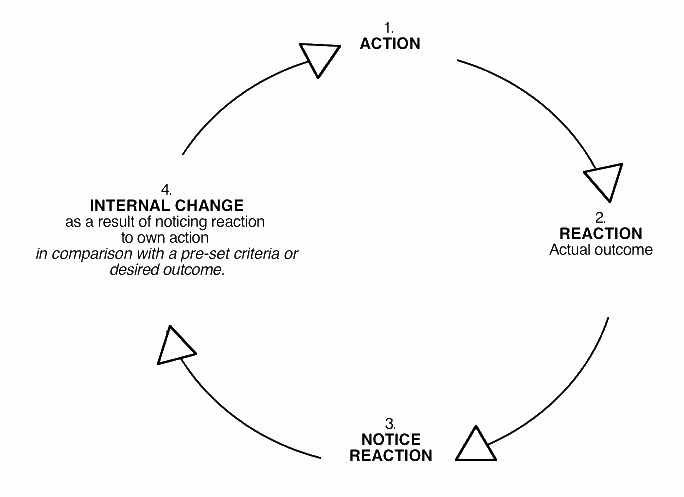
It follows a predictable sequence:
A mistake occurs
Immediate self-criticism emerges
The mistake becomes tied to identity
Emotional intensity increases
Overcorrection or internal shutdown follows
Performance often worsens—not improves
This pattern is common enough to be considered normative in clinical culture, yet rarely defined or discussed directly.
For the sake of clarity, we can name it:
The Clinical Overidentification Loop
The defining feature of this loop is simple:
A discrete behavior is interpreted as a reflection of the entire self.
Why This Happens
This is not a matter of clinicians being “too sensitive” or lacking resilience.
It is, in many ways, trained.
Clinicians operate in environments where:
Errors carry real consequences
Documentation is scrutinized
Decisions can impact safety, autonomy, and care outcomes
Accountability is emphasized—often without equally emphasizing repair
Over time, this creates a cognitive shortcut:
If mistakes are high-stakes, then mistakes must mean something about me.
Add to this:
perfectionistic training environments
productivity pressures
legal and liability concerns
a lack of operational definitions for “good enough”
And the result is predictable.
Clinicians begin to collapse:
performance → identity
The Cost of Getting This Wrong
At first glance, this pattern can look like accountability.
It can even be mistaken for professionalism.
It is not.
When left unexamined, the Clinical Overidentification Loop leads to:
Emotional fatigue mislabeled as burnout
Decreased clinical presence (attention shifts inward, not toward the client)
Defensive practice patterns (over-documentation, risk avoidance)
Reduced willingness to engage complex cases
Erosion of confidence despite increasing competence
Ironically, the attempt to become better through self-criticism often results in:
less effective clinical work
Not more.
A Necessary Reframe
If the problem is overidentification, the solution is not lowering standards.
It is redefining the relationship between performance and identity.
Several distinctions matter here:
1. Mistakes are data—not identity
A mistake tells you something about a moment, a system, or a decision.
It does not define who you are as a clinician.
2. One instance does not equal a pattern
A single occurrence is just that—an occurrence.
Patterns require repetition.
Without repetition, identity conclusions are premature.
3. Repair matters more than perfection
In clinical work, rupture is inevitable.
What defines professionalism is not the absence of error, but the ability to:
recognize it
take responsibility
repair it effectively
This is as true for clinicians as it is for clients.
4. Systems outperform memory
Many so-called “mistakes” are not failures of character.
They are failures of process.
Relying on memory, assumption, or mental tracking in complex environments is inherently unstable.
Strong clinicians do not depend on being perfect.
They build systems that reduce the need to be.
From Reaction to Operation
The shift required is subtle but significant.
Instead of:
“Why did I do that? What is wrong with me?”
The question becomes:
“What failed—and how do I correct it?”
This moves the clinician from:
emotional reaction
tooperational thinking
A simple framework can help:
Pause – Do not respond from the initial emotional spike
Identify – What specifically went wrong? (behavior, system, or decision)
Correct – Address the issue directly and professionally
Install – Adjust the system to prevent recurrence
Move forward – Without continued self-punishment
This is not avoidance.
It is precision.
What Competence Actually Looks Like
There is a quiet misconception in clinical culture:
That competent clinicians make fewer mistakes.
In reality, competent clinicians:
recognize mistakes faster
interpret them more accurately
repair them more cleanly
do not generalize them into identity
The difference is not perfection.
It is processing.
Closing Thought
The goal is not to become a clinician who never makes mistakes.
That is neither realistic nor necessary.
The goal is to become one who understands exactly what to do when they do.
Because in the end, the quality of clinical work is not determined by the absence of error—
but by what follows it.
If you recognize yourself in this pattern, the solution is not more self-criticism.
It’s better structure.
This is the exact gap I work in through A Perceptual Shift—helping clinicians move from:
uncertainty → clarity
reaction → decision-making
self-doubt → operational confidence
Whether through LCSW supervision, counseling, or consultation, the focus is the same:
building systems that hold up under pressure.
Learn more: https://www.aperceptualshift.com/start-with-me
